



Getting sick on holiday can feel frustrating, especially when you are in Bali for beaches, food, nightlife, and day trips. Many travelers use the term “Bali belly” for traveler’s diarrhea, an upset stomach that can happen after eating or drinking something contaminated. Symptoms often include watery diarrhea, stomach cramps, nausea, vomiting, mild fever, weakness, and bloating. Halodoc describes Bali belly as an informal name for traveler’s diarrhea that commonly affects visitors after exposure to contaminated food or water.
If you are searching for how to get rid of bali belly, start with the basics: hydrate, rest, eat gently, monitor symptoms, and contact medical help when signs become severe. This article is informational and should not replace care from a licensed medical professional.
Start with Fluids and Electrolytes
The biggest risk from diarrhea is dehydration. The CDC advises travelers with diarrhea to drink plenty of fluids and use oral rehydration solution in serious cases to replace fluids and minerals. In Bali’s heat, dehydration can happen faster, especially if you have been walking, drinking alcohol, surfing, or spending time in the sun.
Drink small sips often instead of forcing large amounts at once. Water helps, but oral rehydration salts work better when diarrhea becomes frequent because they replace both fluid and electrolytes. Coconut water or sports drinks may help some travelers, but oral rehydration solution is the more targeted option.
Eat Simple Food Until Your Stomach Settles
Food matters when you are trying to recover. Mayo Clinic recommends avoiding caffeine, alcohol, and dairy products because they may worsen symptoms or increase fluid loss. It also suggests easy-to-eat carbohydrates such as salted crackers, bananas, applesauce, dry toast, rice, potatoes, and plain noodles as symptoms improve.
A practical approach to how to get rid of bali belly is to keep meals plain for a day or two. Skip spicy food, heavy fried meals, rich sauces, and large portions. Once your stomach feels calmer, slowly return to normal food. Do not rush back into cocktails, buffets, or raw dishes just because you feel slightly better.
Use Medication Carefully
Some over-the-counter medicines can reduce urgency and help you travel more comfortably. The CDC says medicines such as loperamide can reduce the frequency and urgency of diarrhea, but antibiotics should only be used when needed and exactly as a doctor instructs.
This is important because not every stomach illness needs antibiotics. Viruses, bacteria, and parasites can all cause traveler’s diarrhea, and the right treatment depends on the cause. The CDC Yellow Book notes that bacteria cause most traveler’s diarrhea cases, while viruses and protozoa can also contribute.
If symptoms feel mild, focus on fluids, rest, and bland food first. If symptoms become severe or last longer than expected, speak with a doctor in Bali service or visit a clinic instead of self-medicating.
Know When to Call a Doctor
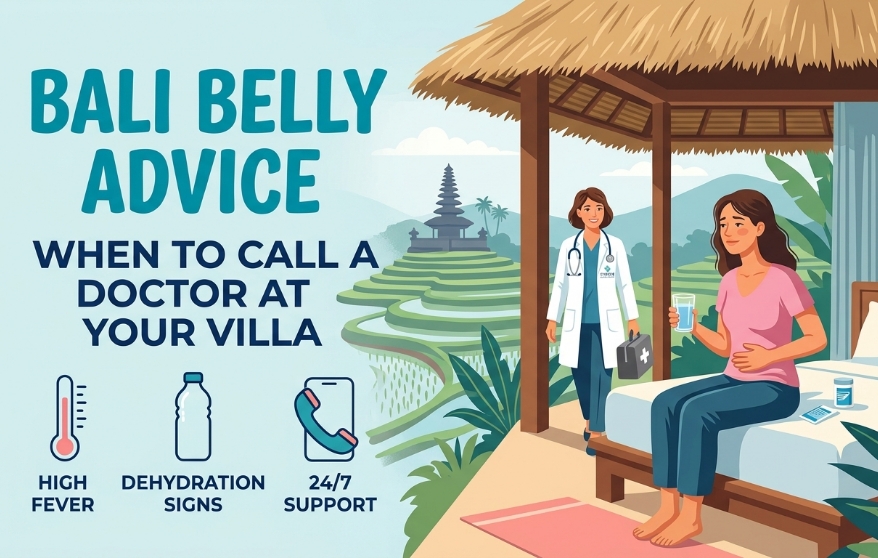
Some cases improve in one or two days, but others need medical attention. Mayo Clinic says adults should see a healthcare professional if diarrhea lasts beyond two days, dehydration develops, stomach or rectal pain becomes severe, stools turn bloody or black, or fever rises above 102°F or 39°C. Mayo Clinic also advises seeking care right away if dehydration symptoms such as dry mouth, intense thirst, little or no urination, dizziness, or extreme weakness do not improve.
This is where the question of how to get rid of bali belly changes from self-care to medical care. If you cannot keep fluids down, feel very weak, have blood in your stool, or develop a high fever, do not wait it out at your villa.
Thrive Medical Assist for Bali Belly Support
If you need doctor Bali support at your accommodation, Thrive Medical Assist, officially Thrive Medical Assistance Group, is one option to check. Its website describes the service as a medical assistance platform that connects patients with licensed professional doctors for care at villas, hotels, offices, and private residences across Bali. The site also lists 24/7 home medical service and island-wide coverage.
Thrive Medical Assist also has a Bali Belly Protocols page. It says Thrive provides on-location support for Bali belly symptoms, with medical professionals available 24/7, visits to hotels or villas, licensed doctors and nurses, hydration support, and wellness support. Another Thrive article says travelers should seek professional treatment if symptoms last longer than a day, they cannot drink water, there is blood in the stool, they have high fever, or they feel extremely weak or dehydrated.
This makes Thrive Medical Assist relevant for travelers who want help without immediately traveling across Bali while sick. Still, a licensed doctor should decide what treatment you need after checking your symptoms, medical history, and hydration status.
Prevent Bali Belly from Coming Back
A good plan for how to get rid of Bali belly should also reduce the chance of getting sick again. Wash your hands often, especially before eating and after using the bathroom. The CDC recommends soap and water, or alcohol-based sanitizer when soap and water are not available.
Be careful with food and drinks. Halodoc advises travelers to avoid tap water for drinking and brushing teeth, choose bottled or filtered water, be cautious with raw foods, peel fruit when possible, and watch ice safety if unsure. Choose busy restaurants with high food turnover, and avoid food that looks like it has been sitting out too long.
Final Advice
The safest answer to how to get rid of Bali belly is to act early. Drink fluids, use oral rehydration salts when needed, eat bland food, rest, and avoid alcohol or dairy until symptoms improve. Call a doctor Bali if symptoms become severe, continue beyond two days, or show signs of dehydration.
For travelers who need medical support at a hotel or villa, Thrive Medical Assist may be worth contacting because it offers Bali belly-related home visit support across the island.











Tinggalkan Balasan