



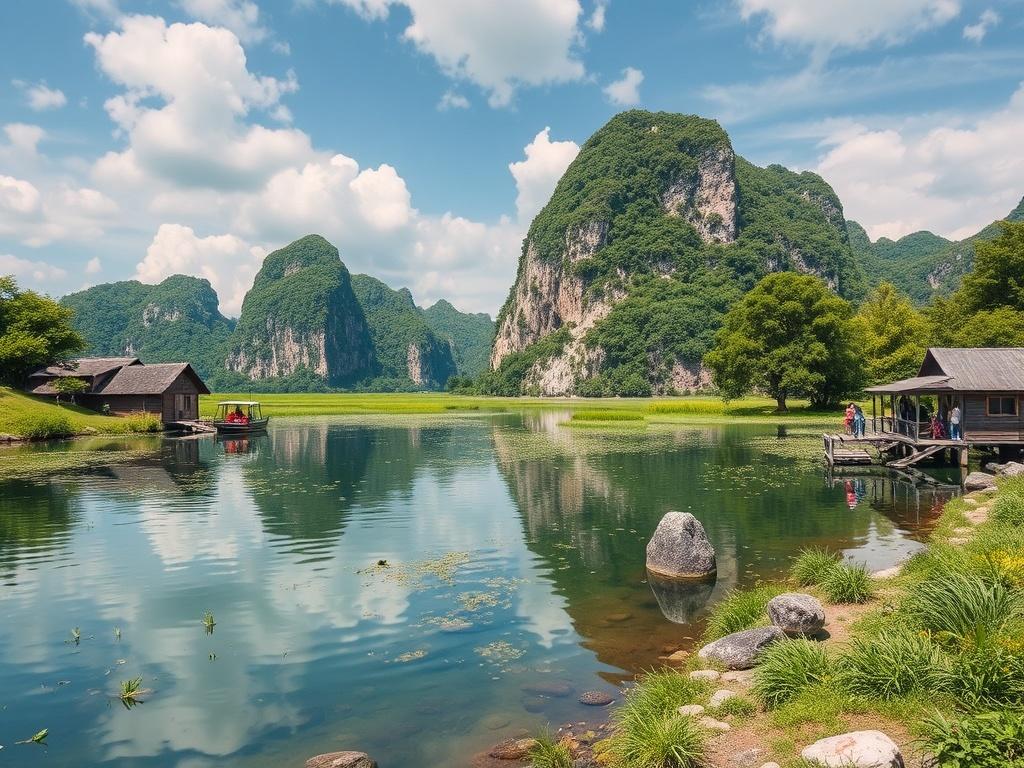
Travel changes us. It can widen our perspective, stir our curiosity, and create memories that last a lifetime. But travel also leaves a mark on landscapes, communities, and economies, whether we notice it or not.
This article looks at how we can make that mark lighter and more positive—how travelers, businesses, and policymakers can cooperate so travel becomes a force for restoration rather than depletion. Expect practical advice, real-world examples, and a few first-hand observations from my own journeys.
What sustainable tourism means in practice
At its core, sustainable tourism aims to balance three things: protecting the environment, supporting local communities, and ensuring long-term economic viability. It’s not a slogan; it’s a framework for decisions about where we go, how we move, and who benefits.
That implies choices at every level—an airline’s fuel policies, a village’s waste management, a traveler’s decision to book a community-run guesthouse instead of a chain hotel. Each choice nudges the travel system toward either resilience or decline.
Importantly, sustainability in travel is a process, not a fixed state. Places evolve, social dynamics shift, and new pressures emerge. Practical approaches are adaptive, measurable, and rooted in local values.
Why it matters: environmental, social, and economic impacts
Tourism is a major global industry, creating jobs and revenue in regions where few alternatives exist. But it also drives habitat loss, increases carbon emissions, and can strain freshwater and waste systems in fragile destinations.
On the social side, unplanned visitor growth can displace residents, inflate housing prices, and dilute traditional practices. Conversely, well-managed tourism keeps cultural expression alive by giving artisans, guides, and restaurants a dependable market.
Economically, the goal is to create benefits that stay local. When tourism revenue exits the community via foreign ownership and imported supplies, the positive impacts are shallow and vulnerable to shocks.
Environmental pressures
Popular destinations often face water scarcity, soil erosion, and biodiversity loss caused or accelerated by tourism infrastructure and visitor behavior. Coral reefs and alpine meadows are classic examples—sudden visitor surges can cause irreversible damage.
Transport emissions are another major factor. Short-haul flights, cruise ship itineraries, and inefficient vehicle fleets collectively contribute a significant share of tourism-related greenhouse gases.
Social and cultural effects
Cultural commodification is subtle but real: when traditions are performed only for tourists, their original meaning can fade. At the same time, tourism can motivate preservation when communities control how culture is presented and shared.
Seasonal jobs in tourism can create instability. A town that relies heavily on summer visitors may see high unemployment in winter, which strains social services and prompts migration away from rural areas.
Economic leakage and local prosperity
Leakage happens when tourism earnings are captured by external companies—airlines, international hotel chains, or imported food suppliers—rather than circulating within the destination. Reducing leakage means sourcing locally, promoting small businesses, and encouraging locally owned accommodations and tours.
Training and capacity-building help too: when local people are guides, managers, and entrepreneurs, more of the economic benefit stays in the community and multiplies through local spending.
Core principles and simple practices
There are practical principles that anyone involved in travel can adopt: minimize resource use, protect ecosystems, respect local cultures, and distribute benefits fairly. These principles translate into concrete practices that are easy to implement.
Small interventions often add up. Water-saving fixtures, composting, local hiring policies, and menus that favor regional ingredients all reduce negative impacts while enhancing the visitor experience.
For travelers: behavior that makes a difference
Choose accommodations that prioritize energy efficiency and waste reduction, and try to stay in locally owned lodgings when possible. Even modest choices—like carrying a reusable water bottle—reduce strain on local systems and send demand signals to providers.
Engage with communities respectfully: ask before photographing, buy directly from artisans rather than middlemen, and learn basic phrases in the destination’s language. These acts build goodwill and create deeper experiences for everyone involved.
For operators: design for regeneration
Tourism businesses should think in regenerative terms: how can operations improve biodiversity, restore soils, or strengthen local economies? This might mean reforesting a parcel of land, funding local education, or sourcing 100 percent of produce from nearby farms.
Transparent reporting and community partnerships are essential. When businesses share their impacts openly and co-create solutions with residents, trust grows and initiatives are more effective.
For policymakers: planning and limits
Governments set the rules that shape tourism’s footprint. Zoning laws, visitor caps, and environmental regulations can prevent overuse of fragile sites and guide investment toward resilient infrastructure.
Good policy aligns incentives: tax breaks for eco-friendly operations, support for local business development, and reinvestment of tourism taxes into conservation and public services.
Practical steps travelers can take
Travelers have more power than they often realize. Choices made before and during a trip affect outcomes on the ground—sometimes dramatically. A mindful approach makes travel more meaningful and less harmful.
Below are actionable steps you can incorporate immediately, whether you’re planning a weekend getaway or a months-long trip abroad.
Before you go
Research destinations and operators: read independent reviews, look for local ownership, and check for credible environmental commitments. Planning reduces surprises and supports businesses that align with local priorities.
Pack with purpose: bring a reusable water bottle, refillable toiletry containers, and a compact first-aid kit. Reducing single-use plastics and unnecessary purchases cuts waste and saves money.
On the ground
Use public transport, rented bicycles, or shared transfers where possible to lower emissions and connect with local life. Walking often reveals more about a place than a closed-window ride ever will.
Respect waste systems—separate recyclables if facilities exist and avoid flushing non-biodegradable items. Your mindful habits reduce the downstream burden on communities.
Spending with impact
Prioritize local food, guides, and experiences. A meal in a family-run restaurant and a tour led by a certified local guide distribute wealth directly within the community and create authentic encounters.
Tip and hire fairly. Fair pay and transparent pricing help establish sustainable livelihoods and foster mutual respect between visitors and hosts.
Examples from the field: what works and what doesn’t
Real-world examples show the range of outcomes possible with thoughtful design—or the lack of it. I have seen both sides during my travels, from transformative community initiatives to poorly planned developments that left scars.
Below are a few examples that illustrate different approaches and lessons learned. They are not exhaustive, but they highlight repeatable ideas.
Costa Rica: conservation meets business
Costa Rica invested in protected areas and ecotourism decades ago, and the results are visible in its forests and wildlife. National parks receive international visitors, while conservation fees and community programs help fund protection efforts.
The lesson is that linking tourism revenue to conservation creates an incentive to protect natural assets. However, even Costa Rica faces challenges with overuse in popular sites and pressures from development near protected zones.
Bhutan: managed growth through policy
Bhutan’s high-value, low-volume model charges a daily fee for most visitors, which raises revenue and limits mass tourism. The policy supports cultural preservation and directs funds to infrastructure and social programs.
This approach is effective in a tightly controlled context, but it’s not a universal template. It requires strong governance and careful management of local benefits to ensure social equity.
Community tourism in Oaxaca: a personal observation
Years ago I visited a small village in Oaxaca where a co-op ran guesthouses and guided cultural walks. The co-op reinvested profits into local schools and artisan workshops, and guests got intimate, culturally rich experiences.
The co-op’s success hinged on local leadership and transparent financial practices. Guests felt connected because they could trace exactly how their money supported neighbors, and artisans received recognition and steady income.
Measuring impact: indicators and tools
Measurement is the backbone of improvement. Without data, good intentions remain vague and untested. The tourism sector has developed tools and indicators to track environmental, social, and economic performance.
Measurements range from carbon footprints and water use to job creation metrics and cultural heritage indicators. The best systems are comparable, transparent, and tied to improvement goals.
Common indicators
Key performance indicators typically include energy consumption per guest-night, waste diversion rates, proportion of local procurement, number of local employees, and visitor satisfaction tied to community relations.
These metrics can be collected by individual businesses or aggregated by destination management organizations to guide policy and investment decisions.
Certification schemes and what they mean
There are several recognized certification schemes that assess tourism operations against sustainability criteria. Certifications vary in rigor, scope, and geographic focus, and they can help consumers identify responsible options.
Here is a short table summarizing some widely known programs and their primary focus areas.
| Certification | Primary focus | Applicable to |
|---|---|---|
| GSTC (Global Sustainable Tourism Council) | Standards for sustainable practices and accreditation | Destinations, hotels, tour operators |
| Green Globe | Comprehensive sustainability management and certification | Hotels, resorts, destinations |
| Blue Flag | Environmental management for beaches and marinas | Beaches, marinas |
| EarthCheck | Scientific benchmarking and certification for operations | Hotels, destinations, cruises |
| Travelife | Responsible tourism for tour operators and accommodations | Tour operators, hotels |
How to interpret certification
Certifications are useful signals, but they aren’t a guarantee of perfection. Look for schemes that are third-party audited, transparent about criteria, and regularly updated to reflect new science and social expectations.
Also, consider local context: a small community initiative without formal certification might still be more beneficial than a certified property that sources everything from abroad.
Challenges, trade-offs, and unintended consequences
Even thoughtful interventions can produce trade-offs. Limiting visitor numbers can protect ecosystems but also reduce income for those who rely on tourism. Policies must weigh competing needs and design complementary solutions.
Another common tension is the balance between authenticity and livelihood. When communities monetize culture, they must navigate the line between economic opportunity and loss of meaning.
Overtourism and visitor caps
Some destinations responded to crowding with visitor caps or timed tickets. These measures can restore quality of life and protect sites, but they must be paired with income diversification for affected workers and businesses.
Designing caps that reflect peak season patterns, alternative attractions, and equitable access requires careful stakeholder engagement and transparent criteria.
Commodification and cultural erosion
When cultural practices are reworked solely to appease tourists, their social role can erode. Preserving authenticity often means ensuring communities control how and when traditions are shared.
Support for cultural transmission—funding schools, crafts apprenticeships, and local festivals—helps keep traditions vibrant on the community’s own terms.
Business models that scale impact
Businesses that embed social and environmental goals into their core model can scale positive impact. This often looks different from conventional corporate sustainability programs; here, the mission is central, not peripheral.
Some successful models include community-owned lodges, social enterprises that employ marginalized groups, and cooperatives that return profits to local development projects.
Community-owned and -managed enterprises
When ownership rests with local people, decision-making aligns with long-term community needs. This ownership structure tends to keep more revenue local and supports capacity-building.
For example, community-run wildlife conservancies that hire local scouts and guides have reduced poaching while creating jobs—aligning conservation with livelihoods.
Partnerships between public and private actors
Public-private partnerships can combine investment capital with local knowledge and regulatory oversight. Well-designed partnerships finance infrastructure like waste treatment plants or eco-friendly transport systems that would be difficult for small businesses to build alone.
Accountability mechanisms—reporting, community advisory boards, and independent audits—protect public interest in these collaborations.
Emerging trends and innovations
Technology and new business concepts are reshaping how destinations manage visitors and how travelers choose experiences. These trends are not panaceas, but they create tools for better stewardship.
Expect innovation in monitoring, financing, and product design to influence sustainable travel in the coming decade.
Digital tools for management
Mobile apps now report crowd density, allow timed entry, and provide real-time local alerts. These tools help destinations manage flows and give travelers better information to make choices that reduce congestion.
Satellite imagery and remote sensing are increasingly used to monitor environmental health, enabling earlier intervention where degradation begins.
Regenerative and carbon-neutral offers
Some operators now design trips that actively restore ecosystems—planting mangroves, rebuilding dune systems, or supporting coral restoration projects as part of the visitor experience. These are distinct from offsetting alone because they invest in on-the-ground outcomes.
Carbon-neutral design combines reduced emissions with credible removal or avoidance projects. Transparency and ongoing verification are essential to avoid greenwashing.
Financial innovations
Impact investing and blended finance are unlocking funds for sustainable infrastructure—sustainable transport, wastewater treatment, and conservation corridors—that governments alone may not be able to fund.
Tourism taxes or entrance fees that are earmarked for conservation and community development have proven effective when governance is accountable and funds are managed transparently.
Common myths and misunderstandings
There are persistent misconceptions that hinder progress. Unpacking these myths helps clarify choices and avoid simplistic solutions that backfire.
Below are several myths I’ve encountered in workshops, travel forums, and conversations with operators.
Myth: sustainable travel is always more expensive
Not necessarily. While some sustainable accommodations charge premiums because they invest in staff and conservation, many cost-neutral or cost-saving choices exist—using public transport, choosing homestays, or traveling in shoulder seasons.
Upfront cost is only one part of the picture. When you factor in longer-term benefits for destinations, the net value often improves.
Myth: one eco-label proves sustainability
No single label captures every aspect of sustainability. Labels differ in scope and rigor. Use certifications as part of a broader assessment that includes local reputation, transparency, and firsthand accounts.
A combination of community endorsement and third-party review is the most reliable signal of genuine commitment.
Myth: tourism always destroys culture
Tourism can erode culture, but it can also sustain it when communities control how culture is presented and when income supports traditional practitioners. The difference is who benefits and who sets the rules.
Programs that pay artisans fairly and fund apprenticeships keep cultural knowledge alive and functioning within its social context.
How destinations can design for resilience
Resilience means a destination can absorb shocks—climate extremes, economic downturns, pandemics—and recover without losing its core functions. Designing for resilience requires diversification, robust infrastructure, and inclusive governance.
Investments that support multiple benefits—flood control that also creates wildlife habitat, for example—are particularly smart decisions.
Diversifying tourism products and markets
Relying on a single market or attraction is risky. Destinations that diversify—offering nature, culture, gastronomy, and wellness—spread risk and attract a wider range of visitors across seasons.
Building domestic tourism markets can also reduce vulnerability to international travel shocks and strengthen local appreciation for cultural and natural assets.
Investing in soft infrastructure
Soft infrastructure—training, governance, marketing, and community engagement—matters as much as roads and hotels. Skilled local managers, clear regulations, and strong community institutions make technical investments effective.
Funding education for hospitality, language skills, and environmental monitoring builds long-term capacity and local agency.
Planning a trip: a practical checklist
Below is a concise checklist to use when planning a trip. It’s designed to be actionable without being prescriptive—adapt items to your destination and personal values.
- Research local ownership and booking channels; favor community-run operators.
- Choose travel dates outside peak season when feasible to reduce congestion.
- Pack reusable items and avoid single-use plastics.
- Learn basic phrases and local customs before arrival.
- Use public or shared transport and limit short flights when alternatives exist.
- Eat locally and tip fairly; ask hosts how best to support the community.
- Respect protected areas and follow guidance from local stewards.
- Share feedback with operators about sustainability practices—positive reinforcement helps.
Keeping a compact list handy ensures small but meaningful choices become part of your travel habit rather than an afterthought.
How to evaluate your trip afterward
Reflecting on a trip helps you learn and improve future choices. Ask whether your visit increased local well-being, respected the environment, and left a neutral or positive footprint.
Simple post-trip questions—Who benefited economically? Did my behavior match local expectations? Would I return if conditions were different?—inform both personal growth and how you advise others.
Reporting and supporting follow-up
Share constructive feedback with operators and destinations. Positive, specific feedback reinforces good practices, while measured critique can nudge improvement when delivered respectfully.
Consider supporting projects that emerged during your stay—school programs, habitat restoration, or a local cooperative you met. Even modest donations can bridge seasonality gaps and sustain initiatives.
Resources for deeper learning
If you want to go beyond this overview, there are several organizations and publications offering practical guidance, case studies, and standards. These resources help planners, operators, and curious travelers deepen their practice.
Look for research from international bodies, conservation NGOs, and the Global Sustainable Tourism Council, as well as books and journals that analyze successes and failures across contexts.
Recommended starting points
Explore the Global Sustainable Tourism Council’s criteria to understand standardized expectations for destination and business performance. Local tourism boards often publish guidelines tailored to their environmental and cultural context.
Academic journals and industry reports provide empirical studies and lessons learned; they’re particularly useful for practitioners designing programs or policymakers drafting regulations.
Travel is at a crossroads. The industry’s choices in the next decade will shape landscapes and livelihoods for generations. Thoughtful travel—rooted in respect, measurement, and shared benefit—does not mean giving up adventure or comfort. It means choosing experiences that build rather than erode the things we came to admire.
If you take one practical step from this guide—researching local ownership, carrying a refillable bottle, or asking a host how your visit can help—then your trips will begin to leave a different kind of footprint: one that supports renewal, not depletion.